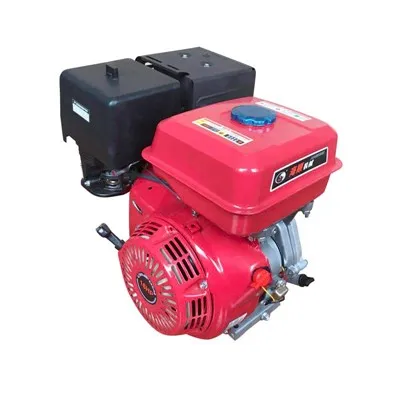

Air-cooled Gasoline
Model: HS-168F
Engine Type: Air-cooled 4 stroke OHV single cylinder
Starting System: Recoil hand starting
Air Cleaner: Semi-dry; Oil bath; Dual
Description
|
Model |
HS-168F |
Max Output(Kw) |
4 |
|
Engine Type |
Air-cooled 4 stroke OHV single cylinder |
Max Torque(N.M) |
10.6 |
|
Starting System |
Recoil hand starting |
Rated Speed(rpm) |
3600 |
|
Air Cleaner |
Semi-dry; Oil bath; Dual |
Displacement(cc) |
196 |
|
Ignition System |
Transsitor magneto |
Fuel Consumption(g/Kg.h) |
395 |
|
Working System |
Reciprocating piston engine |
Fuel Tank Capacity(L) |
3.6/4 |
|
Bore x Stroke(mm) |
68x54 |
Engine Oil Capacity(L) |
0.6 |
Air-cooled gasoline engines are a type of internal combustion engine that uses air as the primary cooling medium to dissipate heat generated during operation. These engines are commonly found in small engines such as those used in motorcycles, small vehicles, portable generators, and certain types of lawn equipment. Here is a brief description of air-cooled gasoline engines:
Cooling System:
Unlike liquid-cooled engines that use a coolant and a radiator, air-cooled engines rely on the circulation of air around the engine to dissipate heat. The engine is equipped with fins or cooling fins that increase the surface area exposed to the air and facilitate heat transfer. As the engine runs, air flows over these fins, carrying away heat and maintaining an optimal operating temperature.
Advantages:
1.Simplicity: Air-cooled engines have a simpler design compared to liquid-cooled engines. They do not require a separate cooling system with radiators, hoses, and coolant pumps, making them more compact and lightweight.
2.Durability: The absence of a coolant system reduces the risk of coolant leaks and related maintenance issues. Air-cooled engines can be more resilient to harsh operating conditions, such as dusty environments or extreme temperatures.
3.Cost-effective: Air-cooled engines are generally less expensive to manufacture and maintain compared to liquid-cooled engines. The simplified design leads to lower production costs and potentially lower repair and maintenance expenses.
Limitations:
1.Cooling Efficiency: Air-cooled engines may have limitations in cooling efficiency, especially under heavy loads or in high-temperature environments. If the engine is subjected to prolonged periods of intense operation, it may be prone to overheating.
2.Noise and Vibration: The lack of liquid cooling can lead to increased noise and vibration levels compared to liquid-cooled engines. However, advancements in design and engineering have mitigated this issue to some extent.
Applications:
Air-cooled gasoline engines find applications in various fields, including:
1.Small Vehicles: They are commonly used in motorcycles, scooters, and small cars, where their lightweight and compact design are advantageous.
2.Portable Generators: Air-cooled engines are often used in portable generators for camping, outdoor events, or emergency power backup due to their portability and ease of use.
3.Lawn Equipment: Many lawnmowers, trimmers, and chainsaws use air-cooled gasoline engines due to their simplicity and maneuverability.
4.Agricultural and Construction Equipment: Certain types of small agricultural machinery, such as tillers and pumps, utilize air-cooled engines for their reliability and ease of maintenance.
In summary, air-cooled gasoline engines provide a simpler, lighter, and potentially more cost-effective alternative to liquid-cooled engines. They rely on the circulation of air for cooling and find applications in motorcycles, small vehicles, portable generators, and various types of lawn and garden equipment.
Hot Tags: air-cooled gasoline, China air-cooled gasoline manufacturers, 13hp Gasoline Engine, 16hp Gasoline Engine, Gasoline Engine for Removing Dust, 7 5 Hp Gasoline Engine, Agriculture Gasoline Engine, Air cooled Gasoline
Send Inquiry
You Might Also Like