


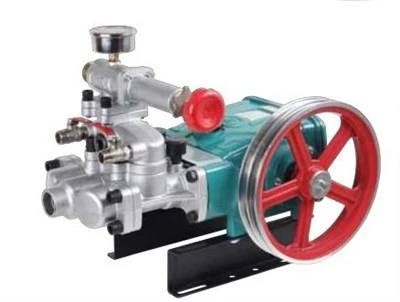
Agricultural Portable Power Sprayer
Products Description Agricultural portable power sprayers are important tools used by farmers for crop protection, pest control, and disease prevention. These machines enable farmers to apply liquid chemicals evenly and precisely over large areas of farmland, ensuring uniformity of coverage and...
Description
|
Model |
HS-100/100C
|
|
Working Pressure(Mpa) |
20~40
|
|
Flow(L/min) |
81
|
|
r.p.m |
900
|
|
Power(Hp) |
7.5 |
|
N.W/G.W(Kgs) |
24/26
|
|
Carton Dimension(mm) |
480x370x330
|
Products Description
Agricultural portable power sprayers are important tools used by farmers for crop protection, pest control, and disease prevention. These machines enable farmers to apply liquid chemicals evenly and precisely over large areas of farmland, ensuring uniformity of coverage and minimizing wastage. The following are some of the key features and benefits of broad-area agriculture sprayers.
Features of Haishun Agricultural Portable Power Sprayer
Tank capacity
Broad-area agriculture sprayers come in varying sizes and tank capacities, typically ranging from 100 to 5000 liters. The tank size depends on the scale of farming and the crop density.
Boom length
The sprayer's boom length can vary from 2 to 24 meters. A long boom helps farmers cover a larger area efficiently, while a shorter boom is ideal for smaller fields and hilly terrain.
Spray nozzles
The spray nozzles are designed to deliver the right amount of chemicals at the desired pressure and flow rate. The nozzle types vary depending on the chemical being applied and the spray pattern required.
Pump capacity
The pump capacity of broad-area agriculture sprayers ranges from 20 to 200 liters per minute, allowing farmers to spray large areas quickly.
Why choose us? --- Your Professional Agricultural Power Sprayer Manufacturer
Haishun Machinery Co. , Ltd. specializes in the research and development, producing and manufacturing of power sprayer, plunger pump, knapsack power sprayer and pressure washing machine.
Reliable Quality
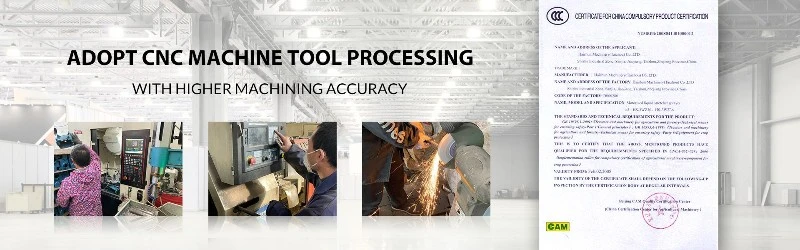
We have many patents and ISO certificate. Every year, we insist on making 5% sale income investment in research and development field.
Strong Technical Team
We possess a high quality scientific research staffs already and a set of perfect quality certification systems.
Rich Experience
Our company established in 2005, and has nearly 20 years experience in manufacturing power sprayers.
Export to many countries
Our products sell well in the domestic market, and find a good sale in more than 30 countries and regions, such as Southeast Asia, The middle-east, Africa, Europe and America etc.
Applications for Agricultural Portable Power Sprayer
Our agriculture sprayers are used for various agricultural applications, including:

Crop protection
They are used to apply pesticides and fungicides to crops to protect them from pests and diseases.
Fertilizer application
They are used to apply liquid fertilizers, micronutrients, and other soil amendments to crops.
Weed control
They are used to apply herbicides to control weed growth.
Water management
They can be used to apply water to crops during drought or to prevent waterlogging in low-lying areas.
Design Details of HS-100/100C Agricultural Portable Power Sprayer
Tank
The tank is made of high-density polyethylene or other materials that are resistant to corrosion and chemical damage.
Nozzles
The sprayer is equipped with a variety of nozzles to deliver the correct amount of chemical over the target area.
Boom
The boom is made of aluminum or stainless steel and is designed to be strong and durable. It can be folded for transport or storage.
Pump
The pump is either hydraulic or electric, and it is designed to be durable and efficient.
Common Challenges & Solutions For Agricultural Portable Power Sprayer
Clogging of Nozzles:
Challenge: Nozzles can clog due to sediment, debris, or improper chemical mixture, affecting spray pattern and efficiency.
Solution: Regularly clean and inspect nozzles. Use filters and strainers to prevent debris from entering the sprayer system. Ensure proper agitation and mixing of chemicals before spraying.
Uneven Application of Chemicals:
Challenge: Uneven application can occur due to improper calibration, worn-out nozzles, or inconsistent pressure.
Solution: Calibrate the sprayer regularly to ensure accurate application rates. Replace worn-out nozzles promptly. Use pressure regulators to maintain consistent spraying pressure.
Mechanical Failures:
Challenge: Engine or pump failures can disrupt spraying operations, leading to downtime.
Solution: Perform routine maintenance checks on engines, pumps, and other mechanical components. Use high-quality parts and fluids. Have a contingency plan and access to spare parts for quick repairs.
FAQ
Q: What types of power sources are used in portable sprayers?
Q: How do I choose the right size of a portable sprayer for my needs?
Q: What are the main components of a portable power sprayer?
Q: How do I maintain a portable power sprayer?
Q: What safety precautions should I follow when using a portable sprayer?
Q: How do I calibrate a portable power sprayer?
Q: What should I do if my sprayer is not spraying properly?
Q: Can portable sprayers be used for organic farming?
Q: How long does the battery last in electric-powered portable sprayers?
Q: Are portable sprayers suitable for spraying tall crops or trees?
Q: Can I use different chemicals in the same portable sprayer?
Q: How do I store a portable sprayer during the off-season?
Q: What is the typical lifespan of a portable power sprayer?
Q: Are portable sprayers easy to transport?
Q: How do I troubleshoot leaks in a portable sprayer?
Q: Can I use a portable sprayer for spot treatments?
Q: Do portable sprayers require any special permits or certifications?
Q: Can I use a portable sprayer for applying liquid fertilizers?
Q: Where can I purchase replacement parts or accessories for my portable sprayer?
Hot Tags: agricultural portable power sprayer, China agricultural portable power sprayer manufacturers, 13hp Gasoline Engine, High Pressure Water Pump for Farming, Agricultural Power Sprayer Piston Pump, 6 5 Hp Gasoline Engine, Power Ceramic Sprayer, Single Impeller Pump
Send Inquiry
You Might Also Like


