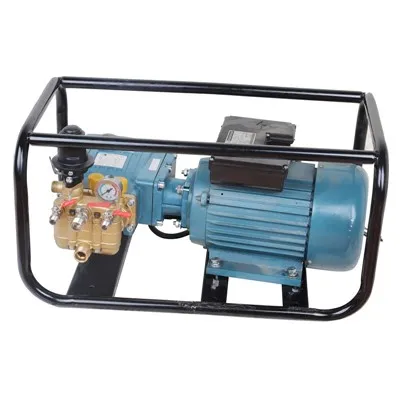

High-pressure Crop Duster
Products Description HS-190/190C High-pressure crop duster High-pressure crop dusters are essential equipment used in farming for various purposes. These machines are designed to apply liquids, such as fertilizers, pesticides, and weed killers, to crops efficiently. The following are some of the...
Description
|
Model |
HS-190/190C
|
|
Working Pressure(Mpa) |
20~40
|
|
Flow(L/min) |
193
|
|
r.p.m |
900
|
|
Power(Hp) |
11 |
|
N.W/G.W(Kgs) |
38/44
|
|
Carton Dimension(mm) |
630x410x340
|
Products Description
High-pressure crop dusters are essential equipment used in farming for various purposes. These machines are designed to apply liquids, such as fertilizers, pesticides, and weed killers, to crops efficiently. The following are some of the characteristics and uses of agricultural sprayers.
Efficient Spraying System
One of the main features of agricultural sprayers is their efficient spraying system, which delivers liquid uniformly on the target area. They have various nozzle types and sizes that help farmers to adjust the spray rate, distribution, and droplet size.
1000 Liters Tank
Additionally, these machines have tanks with a capacity of up to 1000 liters, mounted on wheels or tractor-mounted, making them easy to transport. They also have pumps, filters, and pressure regulators that help control the pressure and prevent blockages.
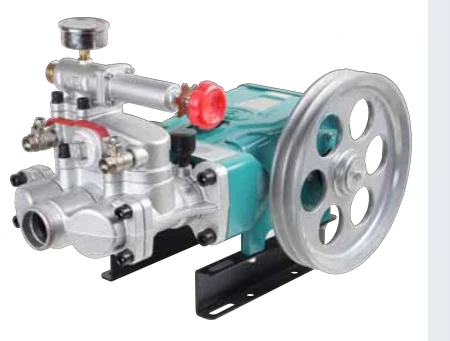
Why choose us?
Haishun Machinery Co. , Ltd. specializes in the research and development, producing and manufacturing of power sprayer, plunger pump, knapsack power sprayer and pressure washing machine.
Reliable Quality
We have many patents and ISO certificate. Every year, we insist on making 5% sale income investment in research and development field.
Strong Technical Team
We possess a high quality scientific research staffs already and a set of perfect quality certification systems.
Rich Experience
Our company established in 2005, and has nearly 20 years experience in manufacturing power sprayers.
Export to many countries
Our products sell well in the domestic market, and find a good sale in more than 30 countries and regions, such as Southeast Asia, The middle-east, Africa, Europe and America etc.
Applications of High-pressure crop duster
Agricultural sprayers have numerous applications in farming, including:
Application of pesticides to control pests, insects, and diseases.
Application of herbicides for weed control, which enhances nutrient and water uptake by crops.
Application of fungicides for prevention and treatment of plant diseases.
Application of fertilizers for nutrient uptake in crops.
Application of growth regulators to control the vegetative growth of the plants.
Structure of Agricultural Pump Sprayers
The structure of agricultural sprayers is simple and easy to use. They have a tank that stores the liquid, a pump that draws liquid from the tank, and a spraying system for delivering the liquid. The pumping system is powered by a gasoline engine, electric motor, or tractor power take-off (PTO). The sprayer has nozzles that help to eject the liquid into the air, forming small droplets that settle on the plants and the soil surface.
The tank holds the liquid solution (pesticide, herbicide, etc.) that will be sprayed. It is usually made of durable plastic or sometimes stainless steel, depending on the application and chemical compatibility.
Agricultural pump sprayers are manually operated, typically with a hand pump mechanism. This pump is used to pressurize the tank, building up pressure that forces the liquid through the spray nozzle.
Connected to the pump, the pressure chamber stores the pressurized air or liquid, depending on the design. This pressure is what propels the liquid through the nozzle when spraying.
The spray nozzle is the endpoint where the liquid exits the sprayer. It disperses the liquid in the desired spray pattern, which can be adjusted for different applications (e.g., misting, jet stream, cone spray).
Filters are often integrated into the sprayer to prevent clogging of the nozzle by debris or sediment from the liquid solution. These filters are usually located at the tank inlet or within the spray wand.
Other Agriculture Power Sprayer
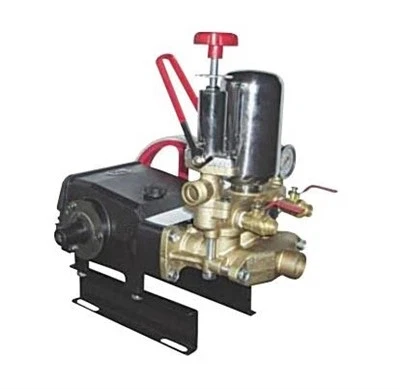
Agriculture Power Sprayer Machine
Broad-area agricultural power sprayer machines are an essential tool in modern farm management. These innovative machines help farmers to manage weeds and pests while also reducing the amount of water and chemicals used in farming.
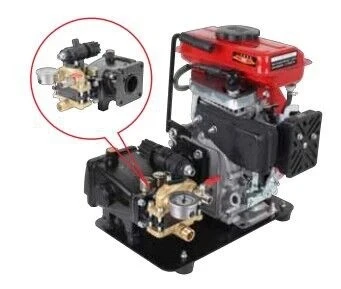
Portable Agriculture Power Sprayer
Portable agriculture power sprayer is an indispensable tool that plays a vital role in enhancing the productivity of farming.
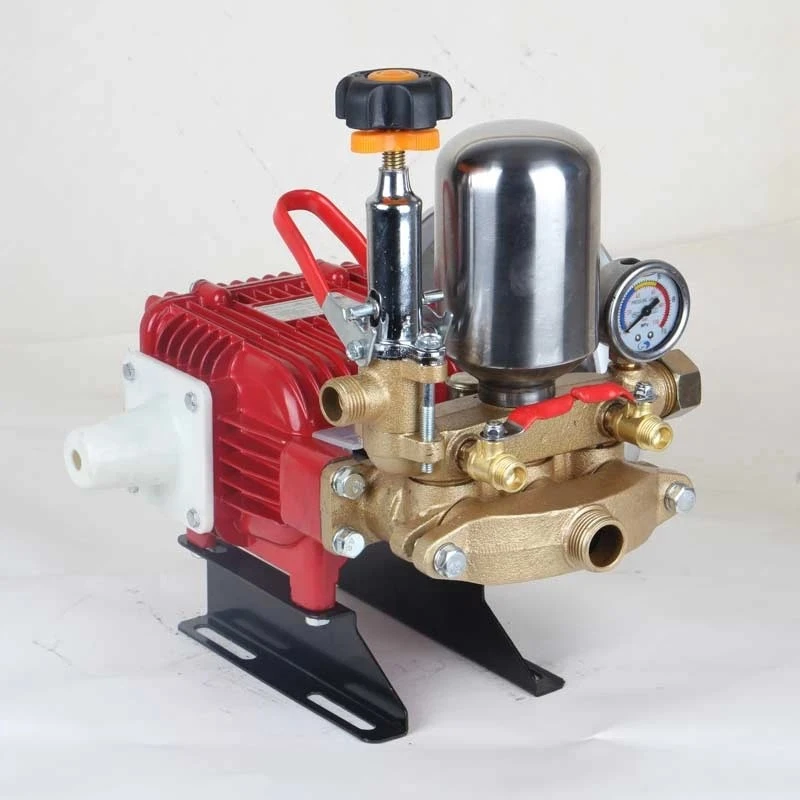
Brass Power Sprayer Pump
The brass power sprayer pump is a type of pump commonly used in agriculture and gardening applications. It is designed to generate high pressure and deliver a fine spray of water or liquid fertilizers. The pump body is typically made of brass, which provides durability and resistance to corrosion.
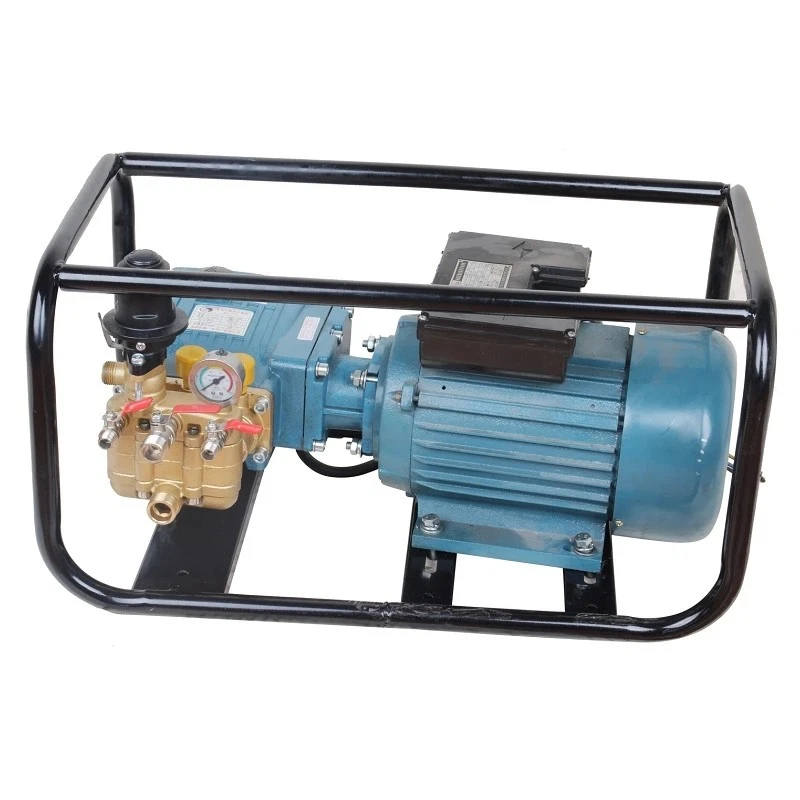
Container single-family home
A power sprayer with ceramic plunger is a type of high-pressure sprayer that utilizes a ceramic plunger as part of its pumping mechanism. The use of a ceramic plunger offers several advantages in terms of durability, corrosion resistance, and efficient performance.
Production Flow Of Agricultural Pump Sprayers
Design and Development:
This initial stage involves conceptualizing the sprayer design based on market needs and user requirements. Engineers and designers create detailed drawings and specifications for the sprayer's components and assembly.
Sourcing Raw Materials:
Manufacturers source raw materials required for the sprayers, such as plastic polymers for the tank, metal alloys for pump components, rubber for seals and gaskets, and various other parts like nozzles and valves.
Injection Molding (Tank and Parts):
For sprayers with plastic tanks and components, injection molding is commonly used. In this process, molten plastic is injected into a mold cavity under high pressure. The plastic solidifies into the desired shape as it cools, forming components like the tank, handles, and other parts.
Metal Fabrication (Pump and Frame):
Parts requiring metal fabrication, such as the pump mechanism, frame, and nozzle fittings, are manufactured. Techniques such as machining, welding, and stamping are used to create these components from metal raw materials.
Assembly of Components:
Once all individual components are ready, they are assembled into the final sprayer unit. This typically includes:
Attaching the pump mechanism to the tank.
Fitting the handle, shoulder straps, and back support (for backpack sprayers).
Installing the spray nozzle, wand, and hose.
Integrating safety features like pressure relief valves and seals.
Quality Control (QC) and Testing:
Before packaging, each sprayer undergoes rigorous quality control checks and testing. This ensures that all parts are correctly assembled, and the sprayer functions as intended. Testing may include pressure tests, spray pattern checks, and leak tests.
Packaging and Labeling:
After passing QC, sprayers are packaged according to specifications. Packaging materials protect the sprayers during shipping and storage and may include user manuals, spare parts, and maintenance instructions. Labels with product information, safety warnings, and usage guidelines are applied.
Distribution and Shipping:
Packaged sprayers are then distributed to wholesalers, depending on the manufacturer's distribution strategy. Shipping logistics ensure that sprayers reach their destinations safely and on time.
After-Sales Support and Service:
Manufacturers often provide after-sales support, including warranty services, spare parts availability, and customer assistance for troubleshooting and maintenance.
FAQ
Q: How does a high-pressure crop duster work?
Q: What are the main components of a high-pressure crop duster?
Tank: Holds the chemical mixture.
Pump: Pressurizes the mixture for spraying.
Hoses and Nozzles: Distribute the spray onto crops.
Boom (optional): Extends the reach for spraying large areas.
Q: What types of chemicals are applied using high-pressure crop dusters?
Q: What are the advantages of using high-pressure crop dusters?
Efficiency: They cover large areas quickly.
Precision: Can target specific areas or entire fields.
Uniformity: Ensure even distribution of chemicals.
Time-saving: Speed up application compared to manual methods.
Q: Are high-pressure crop dusters safe for the environment?
Q: How do farmers calibrate high-pressure crop dusters?
Q: What safety precautions should be followed when using high-pressure crop dusters?
Q: Can high-pressure crop dusters be used for organic farming?
Q: What maintenance is required for high-pressure crop dusters?
Q: How long do high-pressure crop dusters typically last?
Q: Are there regulations governing the use of high-pressure crop dusters?
Hot Tags: high-pressure crop duster, China high-pressure crop duster manufacturers, Water Pump Motor For Farming, 4 Stroke OHV Gasoline, 16hp Gasoline Engine, Agriculture Petrol Water Pump, Agriculture Hand Spray Pump, Agriculture High Pressure Sprayer
Send Inquiry
You Might Also Like