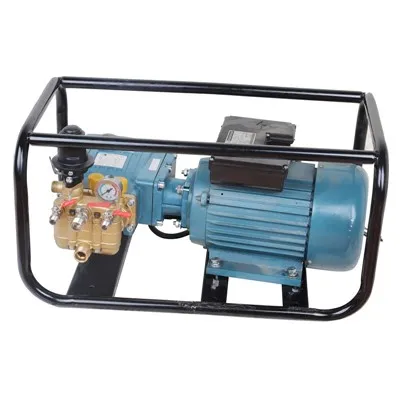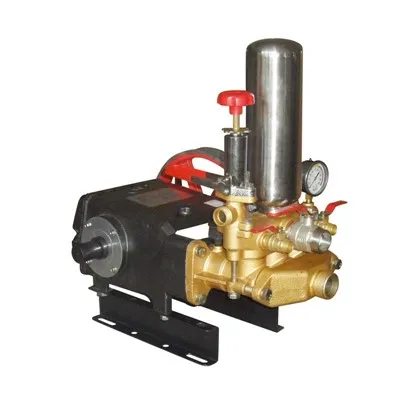

Direct-acting Plunger Pump Power Sprayer
Air Cooled Engine uses natural air as its primary cooling agent. The process of cooling using natural air includes surrounding the outer part of the engine cylinder with fins. These fins create channels or passageways for air that may help in the dispersion of heat energy that is being generated. The fins also augment the surface area of the outer part of the cylinder, making the process of heat dispersion rapidly.
Description
Haishun Machinery Co. , Ltd. is located in economy, traffic convenient Taizhou (The sprayer capital of China), Zhejiang, China. we specialize in the research and development, producing and manufacturing of power sprayer, plunger pump, knapsack power sprayer and pressure washing machine. The products sell well in the domestic market, and find a good sale in more than 30 countries and regions, such as Southeast Asia, The middle-east, Africa, Europe and America etc., we receive good evaluation from the users. The company established in 2005, adopts advanced technology, scientific office procedure, and has developed into research and development, manufacture, sell to integrative modernized enterprises already now.
Leading Service
We are committed to constantly innovating our products to provide foreign customers with a large number of high-quality products to exceed customer satisfaction. We can also provide customized services according to customers' requirements such as size,color,appearance,etc.We can provide the most favorable price and high-quality products.
Quality Guaranteed
We have been continuously researching and innovating to meet the needs of different customers. At the same time, we always adhere to strict quality control to ensure that the quality of every product meets international standards.
Wide Sales Countries
We focus on sales in overseas markets. Our products are exported to Europe, America,Southeast Asia,the Middle East and other regions, and are well received by customers around the world.
Various Types of Products
Our products include all kinds of gasoline engines,gasoline water pumps,and agricultural power sprayers.
Products Description

Metal Agricultural Spraying Pump
Metal agricultural spraying pumps, also known as crop sprayers, are essential tools in modern agriculture. They are used to spray liquids such as pesticides, herbicides, and fertilizers on crops to protect them from pests and diseases and to promote their growth.

Portable Agriculture Power Sprayer
An portable agricultural power sprayer is the equipment used for applying liquid substances to plants or crops. These substances could be fertilizers, herbicides, or pesticides–all of which are important for the maintenance of crop health during the crop growth cycle.

Single Cylinder Gasoline Engine
A single-cylinder engine is a basic piston engine configuration of an internal combustion engine. It is often seen on motorcycles, auto rickshaws, motor scooters, mopeds, dirt bikes, go-karts, radio-controlled models, and has many uses in portable tools and garden machinery.

In modern agriculture, agriculture gasoline engines play a crucial role in powering a wide array of equipment, from tractors and harvesters to irrigation pumps and generators. The versatility, reliability, and efficiency of gasoline engines contribute significantly to the productivity and success of agricultural operations.

Agriculture Water Pump is designed to connect to tractors and use the power from the driveshaft to move water. They serve as an easy and convenient pumping solution for agricultural professionals with existing tractor equipment or power sources.

A double impeller pump, often referred to as a two-stage pump, is a type of centrifugal pump that features two impellers arranged in series. These pumps are designed to provide higher pressure and enhanced efficiency compared to single impeller pumps, making them ideal for various applications, including water supply systems, irrigation, and industrial processes.


Model: HS-3WZ522T
Working Pressure (Mpa): 2~3.5
Flow (L/min): 17.5
r.p.m: 900
What is Air-Cooled Gasoline Engine
Air Cooled Engine uses natural air as its primary cooling agent. The process of cooling using natural air includes surrounding the outer part of the engine cylinder with fins. These fins create channels or passageways for air that may help in the dispersion of heat energy that is being generated. The fins also augment the surface area of the outer part of the cylinder, making the process of heat dispersion rapidly.
Benefits of Air-Cooled Gasoline Engine
Simplicity
Air-cooled engines have a simpler design with fewer moving parts compared to liquid-cooled engines, making them more reliable and easier to maintain.
Weight reduction
Without the need for a liquid cooling system including a radiator, hoses, and water pump, air-cooled engines are generally lighter in weight.
Cold weather performance
Air-cooled engines perform better in cold weather conditions, as they don't suffer from the cooling issues that can plague liquid-cooled engines.
Cost effectiveness
The simpler design of air-cooled engines results in lower manufacturing and maintenance costs compared to liquid-cooled counterparts.
Beautiful appearance
The biggest advantage of air-cooled engines is their beautiful appearance. Unlike flat water-cooled engines, air-cooled engines have a lot of fins on them. These fins have various shapes and present different styles. Therefore, even if the old motorcycles were disassembled, you could tell which one it was just by looking at the engine. For the old generation of riders, the beautiful shape of air-cooled engines is very nostalgic, and this engine with a standard motorcycle style is also very popular.
Mechanical sound
In addition, the exhaust sound full of mechanical noise is also one of the reasons why air-cooled engines are irresistible. Since air-cooled engines do not have cooling water pipes around the cylinders like water-cooled engines, the sound of pistons and valves and mechanical noise can be clearly heard during operation. Some people may think that this sound is very noisy, but people who like motorcycles should love this kind of mechanical noise.
Simple design
Simple design is also one of the advantages of air-cooled engines, because water-cooled engines need to be equipped with engine auxiliary equipment such as pumps and cooling water pipes that can control the continuous circulation of cooling water, as well as radiator tanks and electric fans to cool the cooling water. Although these complex equipment can greatly improve the performance of motorcycles, they also increase the weight of the vehicle and the manufacturing cost. In this regard, air-cooled engines do not need the equipment just mentioned, because the cooling method of air-cooled engines is to let it cool naturally by blowing air directly.
Beautiful appearance
The biggest advantage of air-cooled engines is their beautiful appearance. Unlike flat water-cooled engines, air-cooled engines have a lot of fins on them. These fins have various shapes and present different styles. Therefore, even if the old motorcycles were disassembled, you could tell which one it was just by looking at the engine. For the old generation of riders, the beautiful shape of air-cooled engines is very nostalgic, and this engine with a standard motorcycle style is also very popular.
Mechanical sound
In addition, the exhaust sound full of mechanical noise is also one of the reasons why air-cooled engines are irresistible. Since air-cooled engines do not have cooling water pipes around the cylinders like water-cooled engines, the sound of pistons and valves and mechanical noise can be clearly heard during operation. Some people may think that this sound is very noisy, but people who like motorcycles should love this kind of mechanical noise!
Simple design
Simple design is also one of the advantages of air-cooled engines, because water-cooled engines need to be equipped with engine auxiliary equipment such as pumps and cooling water pipes that can control the continuous circulation of cooling water, as well as radiator tanks and electric fans to cool the cooling water. Although these complex equipment can greatly improve the performance of motorcycles, they also increase the weight of the vehicle and the manufacturing cost. In this regard, air-cooled engines do not need the equipment just mentioned, because the cooling method of air-cooled engines is to let it cool naturally by blowing air directly.
Regular Oil Changes
Proper lubrication is crucial for air-cooled engines. Regular oil changes are essential to keep the engine's components well-lubricated and reduce wear and tear. Use high-quality oil suitable for air-cooled engines, and follow the manufacturer's recommendations for oil change intervals.
Check and Clean the Cooling Fins
Inspect the cooling fins on your engine's cylinders and components. Over time, these fins can accumulate dirt and debris, reducing their efficiency in dissipating heat. Use a soft brush or compressed air to clean them regularly, ensuring optimal cooling.
Monitor Engine Temperature
Watch your engine temperature closely, especially during hot weather or long drives. If your vehicle is equipped with an engine temperature gauge, keep an eye on it. If it starts to approach the red zone, pull over and allow the engine to cool down before continuing your journey.
Adjust Valve Clearances
Valve clearance adjustments are essential for maintaining engine performance. Check and adjust the valve clearances according to your vehicle's maintenance schedule. Properly adjusted valves ensure that the engine runs smoothly and efficiently.
Inspect and Replace Spark Plugs
Regularly inspect and replace spark plugs as needed. Clean or replace spark plugs that show signs of wear or fouling. Properly functioning spark plugs are essential for efficient combustion.
Maintain the Air Filter
A clean air filter is essential for optimal engine performance. Check and replace the air filter regularly to ensure that the engine receives clean and unrestricted airflow.
Pay Attention to Cooling Tinware
Inspect the cooling tinware, which directs airflow over the engine components. Ensure that it is in good condition and properly installed. Damaged or missing tinware can lead to overheating.
Keep Your Engine Bay Clean
Maintain a clean engine bay by regularly removing debris and dirt. A clean engine bay not only looks better but also helps with heat dissipation.
Store Your Car Properly
If you're not driving your classic air-cooled car regularly, store it properly. Use a car cover to protect it from dust and debris. Consider using a trickle charger to maintain the battery's charge.
Consult a Specialist
Finally, if you're unsure about any aspect of maintaining your air-cooled engine, consult a specialist or a mechanic with expertise in classic cars. They can provide valuable advice and ensure that your beloved classic car receives the care it deserves.
FAQ
Q: What are the advantages of air-cooled engines?
Q: What is an air-cooled engine?
Q: Why do air-cooled engines have fins?
Q: What are the disadvantages of an air-cooled engine?
Q: Are air-cooled engines reliable?
Q: What is a air-cooled engine?
Q: Which is better air-cooled or oil-cooled?
Q: What are the disadvantages of an air-cooled engine?
Q: Why are air-cooled engines loud?
Q: How do air-cooled engines stay cool?
Q: So why do people like air-cooled engines so much?
Q: What is a common problem with air-cooled engines in automobiles?
Q: How to keep an air-cooled engine cool?
Q: Is an air-cooled engine good for long drive?
Q: What is the maximum temperature for air-cooled engine?
At its highest, an air cooled engine is almost always running hotter than a water cooled engine. Air cooled aircraft engines typically have maximum allowable Cylinder Head Temperatures of around 350–375f (about 175–185c) which is well above the boiling temperature of water.
Q: How does an air-cooled engine cool itself?
Q: How do you know if your air-cooled engine is overheating?
Q: Are air-cooled engines noisy?
Hot Tags: direct-acting plunger pump power sprayer, China direct-acting plunger pump power sprayer manufacturers, Agriculture Electric Pump, Water Pump for Adding Wet, Agriculture Petrol Water Pump, Metal Agricultural Spraying Pump, Power Sprayer Agricultural Plunger Pump, Single Impeller Pump
Send Inquiry
You Might Also Like