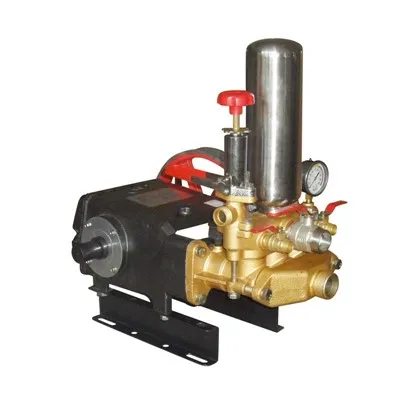
How to adjust the valve clearance in a 4 Inch Gasoline Water Pump?
Leave a message

As a trusted supplier of 4 Inch Gasoline Water Pumps, I understand the importance of proper maintenance to ensure the optimal performance and longevity of these essential machines. One crucial aspect of maintenance is adjusting the valve clearance, a task that can significantly impact the pump's efficiency and reliability. In this blog post, I'll guide you through the process of adjusting the valve clearance in a 4 Inch Gasoline Water Pump, providing step-by-step instructions and valuable tips along the way.
Understanding Valve Clearance
Before we dive into the adjustment process, let's first understand what valve clearance is and why it matters. Valve clearance refers to the small gap between the valve stem and the rocker arm or cam follower when the valve is fully closed. This clearance is necessary to allow for thermal expansion of the valve and its associated components as the engine heats up during operation. If the valve clearance is too small, the valve may not close fully, leading to compression loss, reduced power output, and potential damage to the valve and seat. On the other hand, if the clearance is too large, the valve may open and close late, causing poor engine performance, increased noise, and excessive wear on the valve train components.


Tools and Materials Needed
To adjust the valve clearance in your 4 Inch Gasoline Water Pump, you'll need the following tools and materials:
- Feeler gauges: A set of feeler gauges is essential for measuring the valve clearance accurately. Make sure you have a range of thicknesses to cover the recommended clearance specifications for your pump.
- Socket wrench set: You'll need a socket wrench to remove the valve cover and other components as required.
- Screwdriver: A flathead or Phillips screwdriver may be needed to remove any screws or fasteners.
- Owner's manual: Refer to your pump's owner's manual for the specific valve clearance specifications and adjustment procedures.
Step-by-Step Valve Clearance Adjustment Process
Now that you have the necessary tools and materials, let's walk through the step-by-step process of adjusting the valve clearance in your 4 Inch Gasoline Water Pump:
Step 1: Prepare the Pump
- Ensure the pump is turned off and has cooled down completely. This will prevent any risk of burns or injuries during the adjustment process.
- Remove the valve cover using the socket wrench. The valve cover is typically located on the top of the engine and is held in place by several bolts or screws.
- Clean the valve cover and the surrounding area to remove any dirt, debris, or oil. This will make it easier to access the valve train components and ensure accurate measurements.
Step 2: Identify the Valves
- Locate the intake and exhaust valves on the engine. The intake valve allows the fuel-air mixture to enter the combustion chamber, while the exhaust valve allows the exhaust gases to exit.
- Refer to your pump's owner's manual to determine which valves need to be adjusted and the recommended valve clearance specifications.
Step 3: Rotate the Engine
- Use the socket wrench to rotate the engine's crankshaft in the direction of normal rotation until the piston in the cylinder you're working on is at top dead center (TDC) on the compression stroke. You can determine TDC by aligning the timing marks on the crankshaft pulley or flywheel with the corresponding marks on the engine block.
- At TDC, the intake and exhaust valves should be fully closed, and the rocker arms should be loose.
Step 4: Measure the Valve Clearance
- Insert the appropriate feeler gauge between the valve stem and the rocker arm or cam follower. The feeler gauge should fit snugly but be able to slide back and forth without excessive force.
- If the feeler gauge is too thick and won't fit, the valve clearance is too small. If it's too thin and slides through easily, the clearance is too large.
- Repeat the measurement for each valve, ensuring you use the correct feeler gauge thickness for each valve.
Step 5: Adjust the Valve Clearance
- If the valve clearance is too small, loosen the locknut on the rocker arm adjusting screw using the socket wrench.
- Turn the adjusting screw clockwise to increase the clearance or counterclockwise to decrease it. Make small adjustments and recheck the clearance with the feeler gauge after each adjustment.
- Once the clearance is within the recommended specifications, tighten the locknut to secure the adjusting screw in place.
- If the valve clearance is too large, follow the same process but turn the adjusting screw in the opposite direction.
Step 6: Repeat for All Valves
- Repeat steps 3 to 5 for each valve on the engine, ensuring you adjust the clearance for both the intake and exhaust valves.
- Double-check all the valve clearances to ensure they are within the recommended specifications.
Step 7: Reinstall the Valve Cover
- Once all the valve clearances have been adjusted, clean the valve cover and the mating surface on the engine block.
- Apply a thin layer of gasket sealer to the valve cover gasket and reinstall the valve cover.
- Tighten the bolts or screws evenly to prevent any leaks.
Tips and Precautions
- Always refer to your pump's owner's manual for the specific valve clearance specifications and adjustment procedures. Different models of 4 Inch Gasoline Water Pumps may have different clearance requirements.
- Make sure the engine is at operating temperature before adjusting the valve clearance. This will ensure accurate measurements and prevent the clearance from changing as the engine heats up.
- Use a high-quality feeler gauge to ensure accurate measurements. A worn or damaged feeler gauge may give inaccurate readings.
- Take your time and make small adjustments when setting the valve clearance. Rushing the process can lead to incorrect adjustments and potential damage to the valve train components.
- If you're unsure about any step of the valve clearance adjustment process, consult a qualified mechanic or technician for assistance.
Conclusion
Adjusting the valve clearance in a 4 Inch Gasoline Water Pump is a relatively simple but important maintenance task that can significantly improve the pump's performance and reliability. By following the step-by-step instructions outlined in this blog post and taking the necessary precautions, you can ensure your pump operates at its best and avoids costly repairs down the road.
If you're in the market for a high-quality 4 Inch Gasoline Water Pump or other related products, such as the Water Spray Pump for Agriculture, 2 Inch Gas Powered Water Pump, or Pump for Removing Dust, please don't hesitate to contact us. We're here to help you find the right pump for your needs and provide you with the support and expertise you deserve.
References
- Owner's manual for your 4 Inch Gasoline Water Pump
- Automotive repair manuals and resources