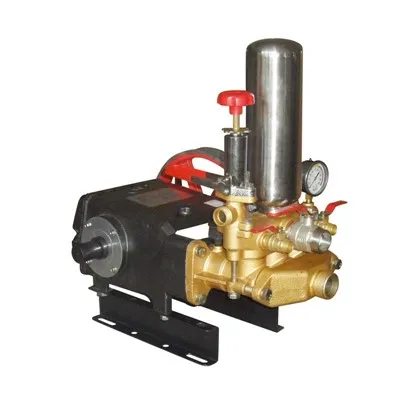
What is the maximum head of an agriculture water pump?
Leave a message

What is the maximum head of an agriculture water pump?
As a supplier of Agriculture Water Pump, I often encounter questions from customers about the maximum head of an agriculture water pump. Understanding the maximum head is crucial for ensuring that the pump can meet the specific requirements of agricultural irrigation, water supply, and other related applications. In this blog post, I will delve into the concept of the maximum head of an agriculture water pump, factors that influence it, and how to choose the right pump based on your needs.
Understanding the concept of maximum head
The maximum head of a water pump refers to the maximum vertical distance that the pump can lift water from the source to the discharge point. It is typically measured in meters or feet. In simpler terms, it indicates the pump's ability to overcome the resistance caused by gravity and friction within the piping system. For agricultural applications, the maximum head is an important parameter because it determines whether the pump can deliver water to fields located at different elevations or to storage tanks placed at a certain height.
Let's take an example to illustrate this concept. Suppose you have a farm where the water source is a well, and you need to pump water to an irrigation system located on a hill. The vertical distance between the water level in the well and the highest point of the irrigation system is the head that the pump needs to overcome. If the maximum head of the pump is lower than this vertical distance, the pump will not be able to supply water effectively to the entire irrigation area.
Factors influencing the maximum head of an agriculture water pump
Several factors can affect the maximum head of an agriculture water pump. Understanding these factors is essential for selecting the right pump for your specific agricultural needs.
-
Pump design and type


- Different types of pumps have different maximum head capabilities. For example, centrifugal pumps are commonly used in agriculture due to their relatively simple design and ability to handle large volumes of water. However, their maximum head is generally limited compared to positive displacement pumps. Positive displacement pumps, such as piston pumps and diaphragm pumps, can generate higher pressures and thus have a higher maximum head. They are often used in applications where high head is required, such as pumping water to elevated storage tanks or for high - pressure spraying.
- The impeller design of a centrifugal pump also plays a significant role in determining the maximum head. A pump with a larger impeller diameter and a more efficient impeller shape can generate higher pressures and achieve a greater maximum head.
-
Motor power
- The power of the motor driving the pump is directly related to the pump's ability to generate pressure and overcome the head. A more powerful motor can provide more energy to the pump, allowing it to lift water to a greater height. However, it's important to note that increasing the motor power alone does not always linearly increase the maximum head. Other factors, such as the pump's efficiency and design, also need to be considered.
-
Pipe diameter and length
- The diameter and length of the pipes used in the pumping system can have a significant impact on the maximum head. A smaller pipe diameter increases the friction within the pipe, which reduces the pump's effective head. Similarly, a longer pipe length also increases the frictional losses. Therefore, when designing an agricultural water pumping system, it's important to choose the appropriate pipe diameter and minimize the pipe length as much as possible to ensure that the pump can achieve its maximum head.
-
Water properties
- The properties of the water being pumped, such as its viscosity and density, can also affect the maximum head. For example, if the water contains a high concentration of suspended solids or has a high viscosity, it will require more energy to pump, which can reduce the pump's maximum head.
Choosing the right agriculture water pump based on the maximum head requirement
When selecting an agriculture water pump, it's essential to accurately determine the maximum head requirement for your specific application. Here are the steps to follow:
-
Calculate the total head
- First, measure the vertical distance between the water source and the highest point of the discharge point. This is the static head. Then, consider the frictional losses in the pipes, valves, and fittings. You can use engineering formulas or online calculators to estimate the frictional losses based on the pipe diameter, length, and flow rate. The sum of the static head and the frictional losses is the total head that the pump needs to overcome.
-
Select the appropriate pump type
- Based on the calculated total head, choose the appropriate pump type. If the head requirement is relatively low (less than 20 - 30 meters), a centrifugal pump may be sufficient. However, if you need to pump water to a greater height, a positive displacement pump may be a better choice.
-
Consider other factors
- In addition to the maximum head, also consider other factors such as the required flow rate, the type of water source (e.g., well, river, or reservoir), and the power source available (electricity, diesel, or gasoline). For example, if you are in a remote area with no access to electricity, a gasoline - powered pump may be more suitable.
Applications of agriculture water pumps with different maximum heads
-
Low - head applications
- For low - head applications, such as flood irrigation in flat fields, Water Pump for Adding Wet with a maximum head of around 10 - 20 meters can be used. These pumps are often centrifugal pumps, which can provide a large flow rate at a relatively low head. They are cost - effective and easy to operate, making them suitable for small - to medium - sized farms.
-
Medium - head applications
- In applications where water needs to be pumped to a moderate height, such as to an irrigation system on a gentle slope or to a storage tank at a reasonable height, pumps with a maximum head of 20 - 50 meters are required. These pumps can be either centrifugal pumps with more powerful motors or certain types of positive displacement pumps. Water Pump for Farm Irrigation is a good option for such applications, as it can provide a balance between flow rate and head.
-
High - head applications
- For high - head applications, such as pumping water to a hilltop farm or for high - pressure spraying, pumps with a maximum head of over 50 meters are needed. Positive displacement pumps, such as piston pumps or multi - stage centrifugal pumps, are typically used in these cases.
Conclusion
The maximum head of an agriculture water pump is a critical parameter that determines the pump's ability to deliver water to the desired location. By understanding the concept of maximum head, the factors that influence it, and how to choose the right pump based on your specific requirements, you can ensure efficient and effective water supply for your agricultural operations.
If you are in the process of selecting an agriculture water pump or have any questions about the maximum head and pump selection, feel free to contact us. We are a professional supplier of agriculture water pumps and can provide you with expert advice and high - quality products to meet your agricultural water pumping needs.
References
- "Pump Handbook" by Igor J. Karassik et al.
- "Agricultural Irrigation Engineering" textbooks from various universities.
- Technical manuals from pump manufacturers.