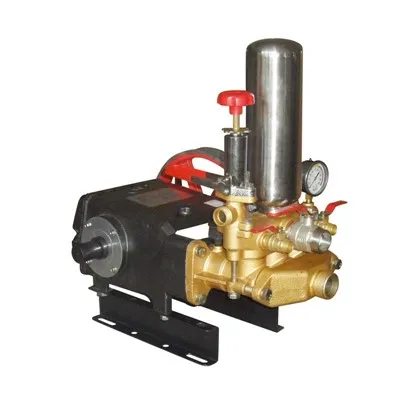
What is the pumping efficiency of an agriculture hand spray pump?
Leave a message

As a supplier of Agriculture Hand Spray Pumps, I've been deeply involved in understanding the nuances of these essential tools. One of the most frequently asked questions by our customers is about the pumping efficiency of an agriculture hand spray pump. In this blog, I'll delve into what pumping efficiency means, the factors that affect it, and how it impacts the overall performance of these pumps in agricultural settings.
Understanding Pumping Efficiency
Pumping efficiency is a measure of how effectively a pump can convert the input power (usually from manual effort in the case of hand - spray pumps) into useful work, which is the movement of fluid (usually water or pesticides) through the pump and out of the nozzle. It is typically expressed as a percentage. A higher efficiency means that more of the input energy is being used to move the fluid, while less is being wasted as heat or in other forms of inefficiency.
Mathematically, pumping efficiency ((\eta)) can be calculated using the formula:
(\eta=\frac{Power_{output}}{Power_{input}}\times100%)
The output power is the power required to move the fluid at a certain flow rate and pressure, while the input power is the power supplied by the user through the hand - cranking or other manual operation.
Factors Affecting Pumping Efficiency
Design of the Pump
The design of the pump plays a crucial role in determining its efficiency. There are different types of agriculture hand - spray pumps, such as Single Impeller Pump and Double Impeller Pump.
A single impeller pump has one rotating impeller that draws in and pushes out the fluid. It is relatively simple in design and is suitable for smaller - scale applications where a lower flow rate is required. However, its efficiency might be limited compared to a double impeller pump.
A double impeller pump, on the other hand, has two impellers working in tandem. This design allows for a higher flow rate and can often achieve better efficiency, especially when dealing with larger areas or when a higher pressure is needed to spray the fluid over a greater distance.
Material Quality
The materials used in the construction of the pump also impact its efficiency. High - quality materials ensure a better fit between the moving parts, reducing friction and wear. For example, pumps with well - machined impellers and seals made from durable rubber or plastic can maintain their efficiency over a longer period. Cheaper materials may lead to leaks, increased friction, and a decrease in pumping efficiency over time.
Maintenance
Proper maintenance is essential for maintaining the pumping efficiency of an agriculture hand - spray pump. Regular cleaning of the pump, especially the nozzle and the impeller, can prevent clogging. Clogged nozzles can restrict the flow of fluid, increasing the pressure inside the pump and reducing its efficiency. Additionally, lubricating the moving parts as recommended by the manufacturer can reduce friction and ensure smooth operation.
Fluid Viscosity
The viscosity of the fluid being pumped is another important factor. More viscous fluids, such as thick pesticides or fertilizers, require more energy to pump compared to water. As the viscosity increases, the pumping efficiency may decrease because the pump has to work harder to move the fluid through the system.
Impact of Pumping Efficiency in Agriculture
Productivity
A high - efficiency agriculture hand - spray pump can significantly improve productivity on the farm. With a more efficient pump, farmers can cover larger areas in less time. For example, a pump with a higher flow rate and better pressure can spray pesticides or fertilizers more quickly, reducing the time spent on these tasks. This allows farmers to focus on other important aspects of their operations.
Cost - Effectiveness
Efficient pumps are also more cost - effective in the long run. Since they require less input power (less manual effort) to achieve the same output, they can save energy and reduce the physical strain on the user. Additionally, pumps that maintain their efficiency over a longer period require less frequent replacement, saving on the cost of new equipment.
Environmental Impact
Using an efficient pump can have a positive environmental impact. When a pump operates at a higher efficiency, it uses less energy, which reduces the overall carbon footprint associated with agricultural activities. Moreover, more efficient spraying can ensure that pesticides and fertilizers are applied more accurately, reducing the amount of chemicals that end up in the environment.


Improving Pumping Efficiency
Selecting the Right Pump
As a supplier, I always recommend that farmers select the right pump for their specific needs. Consider the size of the area to be sprayed, the type of fluid to be pumped, and the required pressure and flow rate. For smaller farms or home gardens, a Single Impeller Pump might be sufficient. However, for larger commercial farms, a Double Impeller Pump or even a 2 Inch Gas Powered Water Pump could be a better choice.
Regular Maintenance
Encouraging customers to follow a regular maintenance schedule is crucial. Providing them with detailed maintenance instructions and offering maintenance kits can help ensure that their pumps operate at peak efficiency.
Training
Offering training on how to use the pump correctly can also improve efficiency. Teaching farmers the proper way to operate the pump, such as the correct speed of hand - cranking or the appropriate pressure settings, can make a significant difference in the performance of the pump.
Conclusion
In conclusion, the pumping efficiency of an agriculture hand - spray pump is a critical factor that affects its performance, productivity, and cost - effectiveness in agricultural applications. As a supplier, I am committed to providing high - quality pumps and the necessary support to ensure that our customers can achieve the best possible pumping efficiency.
If you are interested in learning more about our range of agriculture hand - spray pumps or have any questions regarding pumping efficiency, I invite you to contact us for a detailed discussion and potential procurement. We are here to help you find the right solution for your agricultural needs.
References
- Pump Handbook, Karassik, I. J., Messina, J. P., Cooper, P. E., & Heald, C. C.
- Agricultural Engineering Handbook, ASABE (American Society of Agricultural and Biological Engineers)