What is the role of the camshaft in a 4 Stroke OHV Gasoline engine?
Leave a message

Hey there! As a supplier of 4 Stroke OHV Gasoline engines, I often get asked about the nitty - gritty details of these engines. One component that plays a super important role is the camshaft. So, let's dive right in and talk about what the camshaft does in a 4 Stroke OHV Gasoline engine.
First off, let's quickly go over what a 4 Stroke OHV Gasoline engine is. The "4 Stroke" part means the engine goes through four different stages in its operation: intake, compression, power, and exhaust. "OHV" stands for Overhead Valve, which means the valves are located above the combustion chamber. And of course, it runs on gasoline.
Now, the camshaft is like the conductor of an orchestra in this engine. It's a long, rod - shaped piece with a series of egg - shaped lobes or cams on it. These cams are precisely shaped and positioned to control the opening and closing of the engine's valves at just the right time.
The Intake Stroke
During the intake stroke, the piston moves downward in the cylinder. The camshaft's lobes are responsible for opening the intake valve. This allows the air - fuel mixture to enter the combustion chamber. Think of it as opening the door to let the party guests (the air - fuel mixture) into the house (the combustion chamber). The camshaft has to time this opening perfectly. If the intake valve opens too early or too late, the engine won't get the right amount of the air - fuel mixture, which can lead to poor performance and decreased fuel efficiency.
The shape of the cam lobe on the camshaft determines how long the intake valve stays open and how far it opens. A well - designed cam lobe will ensure that the intake valve opens wide enough and for a sufficient amount of time to let in an optimal amount of the air - fuel mixture.
The Compression Stroke
Once the intake valve closes, the piston moves back up the cylinder, compressing the air - fuel mixture. During this stroke, all the valves need to be closed tightly. The camshaft's design ensures that the intake and exhaust valves remain closed. It's like shutting all the windows and doors of the house to build up the pressure inside. If any of the valves were to leak during the compression stroke, the pressure in the cylinder would drop, and the engine wouldn't be able to generate as much power.
The Power Stroke
This is where the magic happens. The spark plug ignites the compressed air - fuel mixture, and the resulting explosion forces the piston back down the cylinder. The camshaft keeps the valves closed during this stroke. This allows the force of the explosion to be used to turn the crankshaft and ultimately power the vehicle or whatever the engine is driving.
The Exhaust Stroke
After the power stroke, the piston moves back up the cylinder again. The camshaft then opens the exhaust valve. This allows the burned gases to exit the combustion chamber. It's like opening the back door to let the smoke out after a big fire. Just like with the intake valve, the camshaft has to time the opening and closing of the exhaust valve precisely. If the exhaust valve doesn't open at the right time, the burned gases won't be expelled properly, and they can mix with the fresh air - fuel mixture on the next intake stroke, causing all sorts of problems.
Camshaft Design and Engine Performance
The design of the camshaft has a huge impact on the engine's performance. There are different types of camshafts, each with its own set of characteristics.
A camshaft with a more aggressive profile, meaning the lobes are shaped to open the valves wider and for a longer time, can increase the engine's power output. This is great for high - performance engines, like those in sports cars. However, these types of camshafts can also make the engine less efficient at low speeds and may cause the engine to idle roughly.
On the other hand, a camshaft with a milder profile is better for engines that need to operate smoothly at low speeds and have good fuel efficiency. These are often found in everyday cars and small equipment.
Our 4 Stroke OHV Gasoline Engines
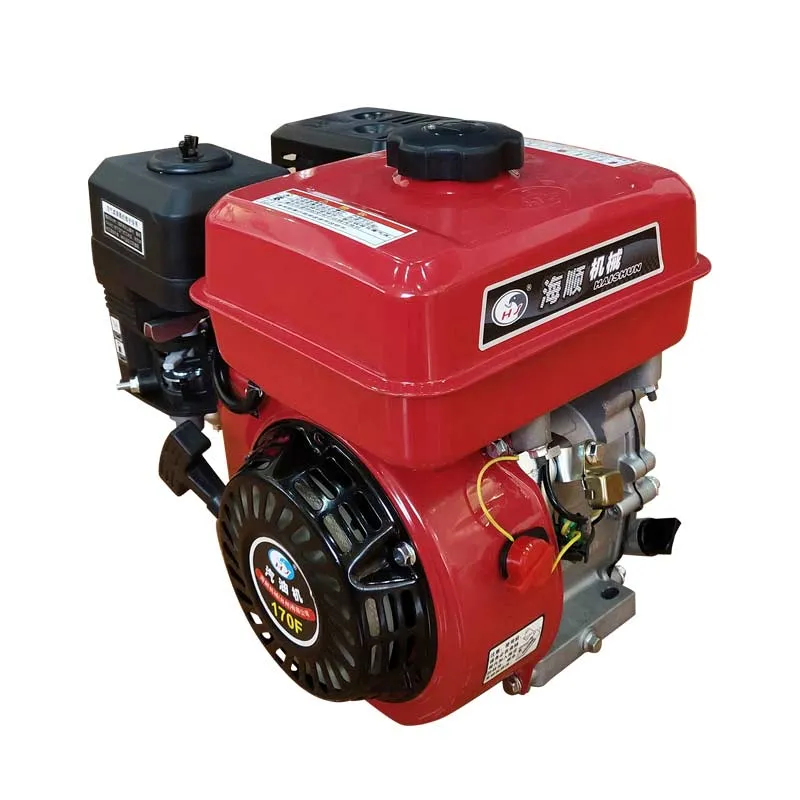
As a supplier of 4 Stroke OHV Gasoline engines, we pay a lot of attention to the camshaft design. We offer a range of engines, from small ones for lawnmowers and generators to more powerful ones for larger equipment.
For example, our Air - cooled Gasoline engines are known for their reliability and efficiency. The camshafts in these engines are carefully engineered to ensure optimal valve timing, which helps these engines run smoothly and use fuel efficiently.
Our 16hp Gasoline Engine is a popular choice for a variety of applications. The camshaft in this engine is designed to provide a good balance between power and fuel efficiency. It allows the engine to generate enough power for heavy - duty tasks while still being economical to run.
And our Gas Fuel Engine series is built with high - quality camshafts that are designed to withstand the rigors of continuous use. These engines are used in a wide range of industrial and commercial applications, and the camshafts play a crucial role in their performance and durability.
Conclusion
In conclusion, the camshaft is an essential component in a 4 Stroke OHV Gasoline engine. It controls the opening and closing of the valves, which is critical for the engine's operation. The right camshaft design can make a big difference in the engine's power, fuel efficiency, and overall performance.
If you're in the market for a 4 Stroke OHV Gasoline engine, whether it's for your lawnmower, generator, or some other piece of equipment, we've got you covered. Our engines are built with high - quality camshafts and other components to ensure reliable and efficient performance.
If you're interested in learning more about our products or have any questions about 4 Stroke OHV Gasoline engines, don't hesitate to reach out. We're always happy to have a chat and help you find the right engine for your needs. Let's start a conversation about how our engines can power your projects!

References
- Heywood, J. B. (1988). Internal Combustion Engine Fundamentals. McGraw - Hill.
- Crolla, D. A. (2001). Vehicle Dynamics. SAE International.